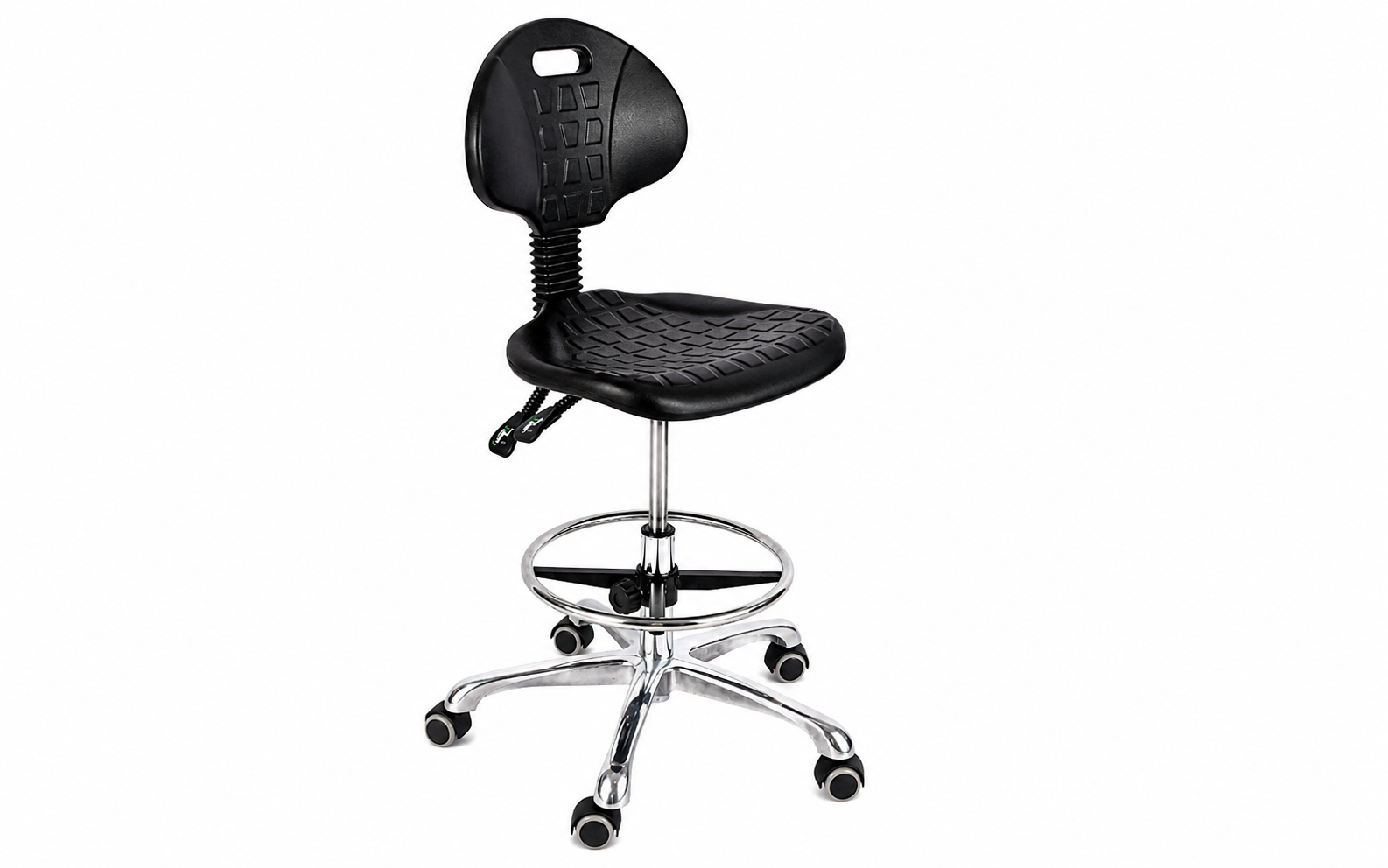
Companies in Argentina can review laboratory chair procurement projects to optimize future purchases by creating a procurement learning council that meets after each important project and converts practical experience into sourcing rules for the next order. This approach is different from a simple delivery review because it treats every completed purchase as a business-learning event involving procurement, laboratory users, facility managers, finance teams, warehouse staff, distributors, and supplier representatives when needed. The council should begin by asking what the project was supposed to achieve: equipping a new teaching laboratory, supporting hospital diagnostic work, expanding pharmaceutical quality-control stations, reorganizing biotechnology research areas, improving food testing capacity, replacing worn chairs in environmental analysis rooms, or preparing industrial inspection workstations for heavier daily use. A product such as industrial polyurethane with chrome foot ring and casters adjustable laboratory chair can be used as a practical reference because it gives the review team a specific professional chair standard to examine, including durable seating, adjustable height, elevated-bench support, caster movement, packaging condition, and repeatable product identity. Argentine companies should review whether the original demand form captured the real workstation situation, whether bench heights and user movements were documented, whether the distributor understood the application before quoting, whether product options were compared fairly, and whether the final decision created value beyond the first unit price. This council-based review is especially useful for Argentine distributors and customers because it creates a transparent B2B improvement method that rewards accurate consultation, dependable delivery, and long-term service rather than short-term discounting. A university in Buenos Aires, a hospital in Córdoba, a pharmaceutical account near Rosario, an industrial buyer in Mendoza, or a regional technical education center may each need different lessons from the same product category. By documenting those lessons in a shared procurement file, companies can prevent future teams from repeating unclear specifications, rushed quotations, weak delivery instructions, or unsupported product choices. The review becomes a foundation for smarter supplier selection, stronger distributor partnerships, and more confident future laboratory chair purchases.
The second step is to use an outcome-based evidence loop that compares what was promised before purchase with what actually happened during delivery, installation, use, and follow-up. Many B2B procurement reviews remain too general because they ask whether the buyer was satisfied, but they do not identify why the project succeeded or where value was lost. When reviewing industrial polyurethane with chrome foot ring and casters adjustable laboratory chair, Argentine companies should evaluate requirement accuracy, quotation completeness, delivery punctuality, receiving readiness, product condition, workstation fit, user acceptance, warranty clarity, and distributor response. Each category should include evidence, not only opinions. Requirement accuracy can be supported by the original application notes, bench measurements, quantity plan, and room layout. Quotation completeness can be checked through product codes, specification descriptions, delivery terms, warranty information, and stock confirmation. Delivery performance can be reviewed through packing lists, arrival dates, carrier records, receiving photos, acceptance notes, and any discrepancy reports. User outcome can be measured through comments from laboratory managers, technicians, students, researchers, inspectors, or medical staff who used the chairs in real work. This evidence loop helps companies identify hidden purchasing costs such as repeated clarification emails, avoidable quotation revisions, emergency freight, delayed approval caused by missing documents, product mismatch, weak receiving instructions, or slow after-sales support. Argentine distributors benefit from this structure because strong service becomes visible and measurable. If a distributor provides complete product information, honest delivery planning, clear claim procedures, and useful reorder guidance, the review can justify keeping that distributor in future preferred lists. If a supplier appears cheaper but creates additional workload or uncertainty, the review can show why the lowest price is not always the best B2B decision. Customers also benefit because evidence-based review creates better internal purchasing confidence and supports more professional negotiation. Instead of arguing from memory, the company can show which specification worked, which distributor performed well, which risks must be controlled, and which purchasing rules should change before the next laboratory chair order.
The third requirement is to transform review findings into a future purchase optimization system with approved specification updates, distributor development actions, lifecycle cost tracking, and searchable buyer education content. After completing a project involving industrial polyurethane with chrome foot ring and casters adjustable laboratory chair, the company should create a future-purchase record that includes installation site, laboratory function, customer sector, quantity purchased, quantity accepted, approved specification, selected distributor, supplier evidence, quotation cycle time, approval duration, actual delivery date, packaging condition, user comments, service questions, warranty status, spare parts considerations, reorder probability, and possible expansion. This record should update the company’s procurement playbook so the next buyer can reuse successful decisions and avoid known risks. If a university confirms that one specification works across several teaching rooms, that standard can be used for future classroom projects. If a hospital discovers that early documentation review prevents delays, future requests can require technical files before price comparison. If a pharmaceutical or biotechnology customer values supply continuity, the next supplier scorecard can give more weight to stability and replacement support. If an industrial buyer needs fast response, distributor service speed and local delivery planning can become part of the evaluation. Performance dashboards should measure specification reuse, approval-cycle reduction, quotation accuracy, first-pass acceptance, freight predictability, complaint closure, user satisfaction, reorder conversion, total lifecycle cost, and distributor reliability. These indicators show whether procurement reviews are improving future purchases or only creating reports. For SEO and market development, companies and distributors can turn review insights into educational content about laboratory chair evaluation, post-purchase audits, delivery acceptance, B2B distributor service, spare parts planning, and future procurement strategy. This kind of content helps attract Argentine distributors and customers searching on Google for practical laboratory furniture sourcing guidance. Ultimately, companies in Argentina can review laboratory chair procurement projects to optimize future purchases by combining procurement learning councils, outcome-based evidence loops, distributor accountability reviews, specification refinement, lifecycle cost visibility, and continuous procurement playbook updates. This approach reduces repeated purchasing mistakes, improves buyer confidence, strengthens distributor credibility, and builds a scalable B2B laboratory furniture procurement model for Argentina’s professional market.
READ MORE